

Here are the results of your search. Thank you for using the search engine. If you wish, you can continue searching for other productions.
There are no productions with the selected filters.

Sauria
A severed hand lies in the forest. Itzala, a former mining town beside a reservoir, is trapped between the mountains, the steel mill and the neglect of a declining industrial past. Nao (14) returns with her mother, Mari (50), to her family home for her grandfather’s funeral. While Mari slips back into the habits of her youth, night hunts and motorcycle rides, Nao feels alienated in a place she longs to escape. Everything changes when she meets Alaitz, a fearless girl her age. Together, they set out to investigate the mysterious death of Nao’s grandfather, a former reservoir warden and hunter. Their search takes them through the forest, the dam, the steel mill’s looming towers and an abandoned mining colony. What begins as a summer adventure turns sinister when brutally mutilated animals start appearing across the village. As locals whisper of a bad omen, Nao and Alaitz discover that a bloodthirsty saurian creature is behind the killings. When a young man disappears, fear grips Itzala and the hunters organise a manhunt. Nao soon discovers that the monster is her own mother. She must choose between handing Mari over or protecting her, only to realise that the curse runs in her blood too: she is beginning to transform. In Itzala, an ancient legend of death and redemption is reborn, and Nao must discover who she is before the town decides to kill her.
View +
RIVER WOMAN
In the long summer of 1872, Lucrecia Grouard (33) turns her back on her older brother, a religious zealot embarked on a reckless, suicidal mission. Penniless and lost in the remote reaches of the West, Lucrecia agrees to take charge of the ferry across the River Erebus. And so begins a spiritual journey of her own. Her guides are the passengers she ferries from one bank to the other: an Indigenous woman, an abandoned mixed-race girl, a man with no arms, three sinister horsemen… until Lucrecia herself reaches the other side of the profound grief that has held her captive.
View +
SISTERS
Chelo and Marta are sisters and their lives and their relationship are about to change. That summer, following a family gathering, an allegation of sexual assault will sever ties, bring the past into the present, and highlight the difficulty of hurting one part of the family in order to protect the other.
View +
THE DAUGHTERS
A twenty-year-old girl is kidnapped one night by a stranger. The next morning, she wakes up in a house in the middle of the woods where three other young women are being held captive. There, she discovers that they behave as if they were the kidnapper’s daughters and that, whether she likes it or not, her fate will be to become one of them.
View +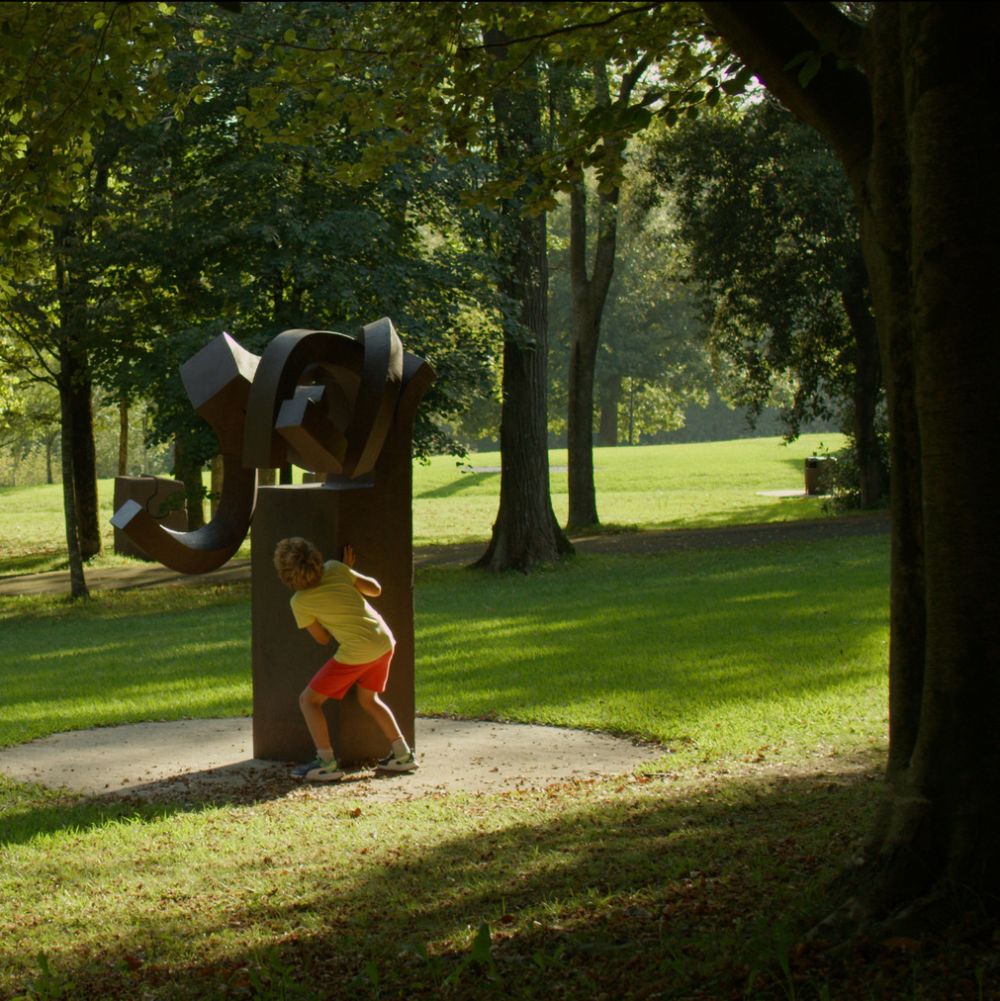
A HUNDRED BIRDS IN THE SKY
Over the course of twelve months, while the Earth makes a turn around the sun, Jone, an Art student, will head to Chillida Leku in search of a sculptor who was born a hundred years ago. There, step by step, the artwork of Eduardo Chillida, his writings and ideas, and the conversations with those who surrounded him will gradually build in the air the image of an uncapturable man. Like that horizon that Chillida so often contemplated; the closer you get, the more it slips away.
View +
THE CHAPEL
Emma wants to learn to communicate with the spirit of a girl who has been trapped in a chapel for centuries and for this reason she tries to convince Carol, an incredulous and false medium, to help her. Contacting her spirit will help her stay close to her sick mother when she dies. What Carol doesn't suspect is that Emma really does have 'the gift' and that if the girl continues to try to use it without her help, she will put her little young life in danger.
View +
Berta discovers that she is pregnant and doesn’t know what to do, as she doubts her partner Manel’s love for her. On the advice of her friend Sílvia, she decides to give him burundanga, the “truth drug.” Once it takes effect, Manel confirms that he is in love with her, but also confesses something far more unexpected: he is a member of ETA.
View +
PRAY FOR US
Set in Spain in 1974, the film follows Ana, a 19-year-old from Barcelona considered rebellious by her wealthy family, who is set by her father to a reform institution run by the Patronato. There, she endures a strict discipline regime imposed by nuns, especially the merciless Sister Socorro. Amid the harsh conditions, she finds solace in a deep bond with another girl, Sole. Together, they struggle to survive and attempt to escape, though fate cruelly reunites them when Sole is recaptured. Determined to protect her friend, Ana confronts Sister Socorro's twisted authority and is forces to make a final, painful sacrifice in an attempt to save them both.
View +
MUGURUZA FM 40 TOUR
Four decades after stepping onto a stage for the first time, Fermin Muguruza embarks on his final large-scale tour: a collective journey celebrating 40 years of music, commitment, and cultural resistance. This music documentary captures the pulse of that journey through packed concert halls, endless miles on the road, encounters along the way, and the shared energy that has resonated across generations—from Kortatu and Negu Gorriak to his work today. On stage and behind the scenes, the film immerses itself in the intensity of a defining moment, capturing the spirit of what would become his last tour on this scale. Through music, images, and memory, the documentary crafts a cinematic portrait of an artist who has transformed his songs into instruments of struggle, identity, and community celebration, accompanying the final great dance of an essential voice in contemporary music.
View +
LO NUESTRO
On a stormy summer night, LUIS (45) flees the scene after accidentally hitting a woman riding her bicycle down a wide avenue on the outskirts of the city. Racked with remorse, and after learning that the woman is in critical condition, Luis decides to donate his liver to her as the only way to make amends for his fateful mistake. When Luis meets SOFIA (40), love blossoms instantly between them, and they immediately begin a passionate relationship. Shortly afterward, Luis discovers that Sofia is the very woman he hit, and their relationship takes a 180-degree turn. Sofía begins to have recurring nightmares and wants to know more about that accident, but Luis is unable to tell her the truth. His love for her and his fear of losing her—fearing he might not earn her forgiveness—will lead Luis to a point of no return where an innocent man will pay the full price.
View +